The Sausage That Keeps: Lap Cheong for Ordinary British Weeknights
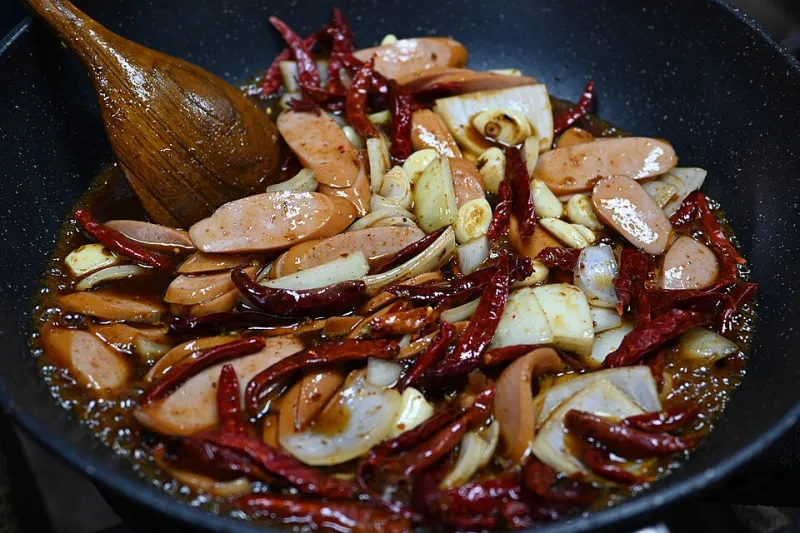
Photo: PattayaPatrol, CC BY-SA 4.0, via Wikimedia Commons
There is a sausage in the fridge door that does not ask for much. It is firm, dark red, a little wrinkled at the ends, and it will sit there for weeks without complaint. You might know it as lap cheong — the sweet, cured Chinese sausage that turns up in clay-pot rice, in steamed buns, and increasingly in the trolleys of anyone who has clocked how useful it is. Think of it less as a specialist ingredient and more as the Chinese answer to a very good British sausage: salty-sweet, intensely savoury, and built to season a whole pan rather than star in a fry-up.
What it actually is
Lap cheong is pork, fat, sugar, salt, soy and often a little rose-scented wine, cured and dried until firm. It is not a fresh sausage you cook through like a Cumberland. You slice it thin — really thin — and let the fat render. That fat is the point. It carries sweetness, salt and a deep cured flavour into whatever it touches. A single sausage can lift a pan of greens, a tray of potatoes or a plain omelette into something that tastes like it was made with intent.
The texture is chewy rather than snappy, and the flavour is closer to a honey-glazed gammon than to a herby banger. If you like the sweet-savoury edges of a bacon rasher, you are already halfway there.
Why it belongs in a British kitchen
British cooking already understands cured pork. We keep bacon in the fridge, we crumble black pudding into a pan, we know that a bit of salty fat makes everything else taste more like itself. Lap cheong slots into that same logic. It is not a novelty. It is a store-cupboard shortcut with a long memory.
It also solves a very British weeknight problem: how to get a lot of flavour out of a little effort. One lap cheong, sliced thinly, will season a whole wok of spring greens. Two will perfume a tray of roast potatoes. Half a one, chopped fine, turns eggs into supper. There is no marinade, no timing anxiety, no need to remember to defrost anything. It is the sort of ingredient that makes a Monday feel less like a negotiation.
Sourcing notes for 2026
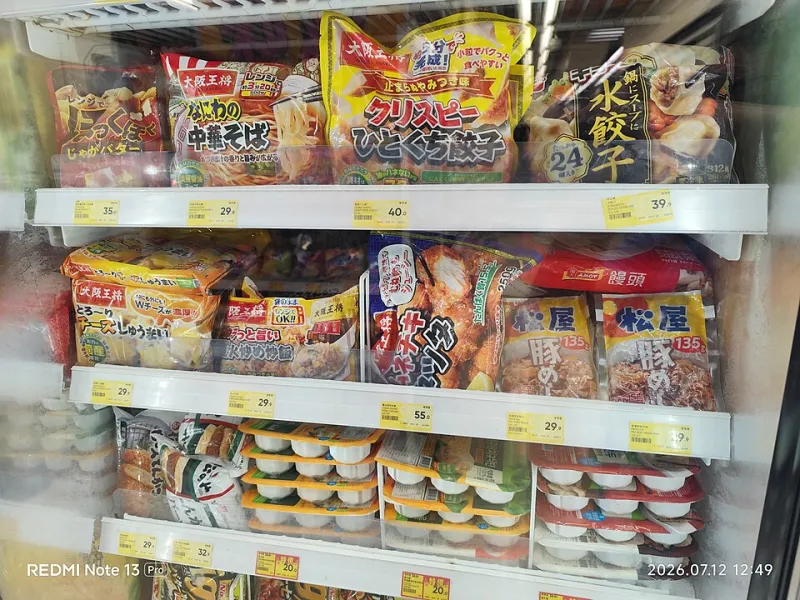
The good news is that lap cheong is easier to find than it used to be. Larger Tesco and Sainsbury's stores often carry vacuum-packed sausages in the world foods aisle. Asian supermarkets — the kind with a window full of roast duck and a freezer cabinet of dumplings — will usually have several brands. Online specialists are reliable if you want to compare labels without leaving the house.
Look for sausages that are firm, evenly coloured and smell sweet rather than sour. Vacuum-packed is standard. Once opened, wrap what you don't use tightly and keep it in the fridge for a week or freeze it for longer. You do not need to cook it before eating if it is a cured variety, but for weeknight cooking you will want to slice and render it anyway.
A note on brands: some are sweeter, some more wine-forward, some saltier. Start with a mid-priced vacuum pack from a reputable Asian grocer and adjust. If it feels very hard, slice it thinner. If it feels soft, use it soon.
Three unfussy things to do with it
1. Lap cheong with spring greens and rice
This is the one to learn first. Cook a pot of long-grain rice — basmati is fine, jasmine is better. While it steams, slice one lap cheong into thin coins and render it gently in a wok or wide pan. Add a bag of shredded spring greens or savoy cabbage and stir-fry until just wilted. Splash in a little soy, a teaspoon of sesame oil if you have it, and fold through the rice. The sausage does the seasoning; you just need to keep the greens bright. A fried egg on top is not compulsory, but it is correct.
2. A tray of roast potatoes with lap cheong
Parboil your potatoes as usual, drain them, and shake them in the colander until the edges roughen. Tip them into a hot roasting tin with a little rapeseed oil. Slice one lap cheong per two people into thin rounds and scatter them among the potatoes. Roast at 200C fan / 220C / gas 7 until the potatoes are golden and the sausage is crisp at the edges. The fat from the sausage bastes the potatoes as they go. Serve with whatever Sunday-roast leftovers you have, or just a sharp green salad and too much mustard.
3. The five-minute omelette
Beat three eggs with a pinch of salt. Slice half a lap cheong very thin and fry it in a small non-stick pan until the fat runs. Add a handful of chopped spring onion, pour in the eggs, and cook gently, drawing the set edges into the middle. Fold it over when it is just set. That is it. The sausage gives you salt, sweetness and enough fat to make the eggs taste richer than they have any right to on a Wednesday.
A small drawer, a long way
You do not need a dedicated larder shelf. A single vacuum pack in the fridge door, or a few sausages in the freezer, will cover you for months. Lap cheong is not asking to be the centrepiece. It is asking to be the thing you reach for when a pan of greens needs a bit of backbone, or when the potatoes need a better edge. That is a very British way to cook, and a very good reason to keep one within reach.