Fierce Heat, Tiny Cabbages: Why Brussels Sprouts Belong in the Wok
Every December the same conversation starts. The sprouts arrive at the table, someone announces that they hate them, someone else insists they are fine with bacon, and the dish gets passed around with polite suspicion. The sprout does not need defending. It needs different heat.
The Sprout’s Reputation Problem
Let us be fair to the sprout. For years it was boiled until it slumped, or roasted until its outer leaves went leathery while the middle stayed stubborn. That is not the vegetable’s fault. A Brussels sprout is a tiny cabbage, and tiny cabbages respond to two things above all else: direct heat and a little bit of fat. Treat them softly and they turn sulphurous and soggy. Treat them fiercely and they turn sweet, crisp-edged and deeply savoury.
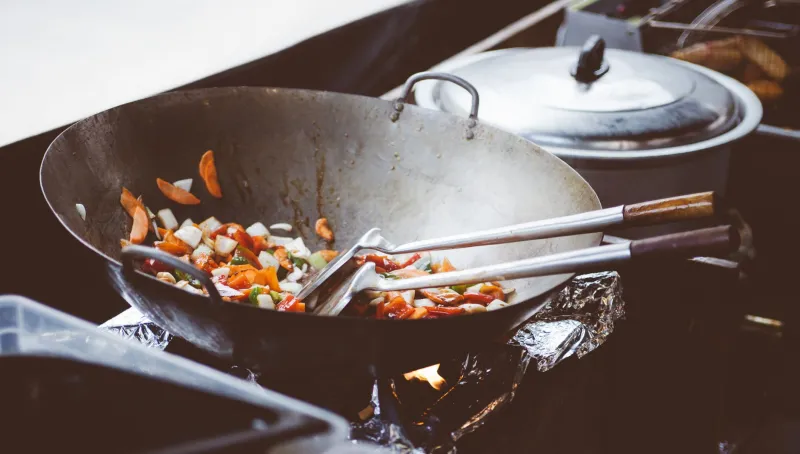
That is why the wok makes so much sense. A hot wok gives sprouts what a roasting tray often cannot: fast, aggressive, edge-to-edge heat. The cut faces caramelise, the loose leaves frizzle, and the whole thing stays lively rather than stewed.
Why the Wok Makes Sense
A sprout halved lengthways has a flat cut side and a tight little core. Press that cut side into a screaming-hot wok and you get browning in minutes. The curved sides of the wok let you toss them without losing half the batch over the hob. And because the cooking is quick, the sprouts keep their bite — that slight resistance before the sweetness comes through.
This is not a subtle background vegetable. It is a stir-fry ingredient with a bit of attitude, and it works beautifully with the salt-and-pepper treatment that British Chinese takeaways have made familiar: plenty of pepper, a savoury salt base, garlic, chilli and a whisper of five-spice.
Buying Sprouts in the UK: A Short Field Guide
From November through January, UK markets and supermarkets are full of sprouts. Look for small-to-medium heads that feel firm and tight. Avoid any with yellowing leaves, soft spots or a loose, open shape — those are older and will cook unevenly.
Market stalls often sell sprouts on the stalk, which is a good sign. The stalk keeps them fresher for longer, and you can snap off what you need. Supermarket bags are perfectly fine, but check for condensation inside the bag; wet sprouts will steam rather than char. If you are buying loose from a greengrocer, pick through the pile and choose the compact ones.
Whatever you buy, dry them properly. This is the step most people skip. Wet sprouts in hot oil will spit and steam, and steam is the enemy of crisp edges. Halve them, trim the base, pull away any loose outer leaves — keep those, they crisp beautifully — and pat everything dry with a clean tea towel.
The Salt-and-Pepper Mix
The name is slightly misleading. Good salt-and-pepper seasoning is not just table salt and a shake of white pepper. For a batch big enough for four as a side, mix a teaspoon of flaky sea salt, half a teaspoon of white pepper, half a teaspoon of freshly ground black pepper, half a teaspoon of toasted Sichuan peppercorns ground fine, and the tiniest pinch of five-spice. That last pinch should be barely there — a background note, not a headline.
Make more than you need and keep it in a small jar. It is excellent on chips, roast chicken and fried tofu.
The Method: Hot, Fast and Slightly Loud
Get your wok properly hot before anything goes in. A thin slick of rapeseed or groundnut oil, then the sprouts cut-side down in a single layer. Do not crowd them. If your wok is small, cook in two batches. Leave them alone for two or three minutes so the cut faces can take on colour, then toss and keep them moving.
Add sliced garlic, chopped red chilli and the white parts of spring onions. Sprinkle over the salt-and-pepper mix. Keep tossing until the sprouts are charred at the edges and just tender at the core — another two or three minutes. Finish with the green spring onion tops and a small splash of Shaoxing wine if you have it, letting it sizzle away almost instantly.
What you want is a plate of sprouts that are crisp in places, soft in others, and heavily seasoned without being salty.
Serving It: From Pub Table to Boxing Day Fry-Up
At a pub table, these sprouts sit happily next to a roast, a pie or even a burger. They cut through gravy and rich meat, and they are just as good at room temperature, which makes them useful for a crowded Christmas table.
On the big day itself, they can replace the traditional boiled version without much fuss. Make them at the last minute while the bird rests, or cook them earlier and refresh them in a hot wok for thirty seconds before serving.
And on Boxing Day, chop any leftovers roughly and fry them with cold roast potatoes, a spoonful of stuffing and a fried egg on top. The sprout’s charred edges come back to life, and the salt-and-pepper seasoning does the work of a whole jar of condiment.
A Small Conversion
This is not about hiding sprouts or covering them up. It is about cooking them in a way that makes them taste more like themselves — sweet, green, savoury and a little smoky. One hot wok, a good pinch of salt-and-pepper mix, and the most divisive vegetable on the British table becomes the one people reach for first.