Six Weeks from Seed to Stir-Fry: Chinese Greens for the British Plot
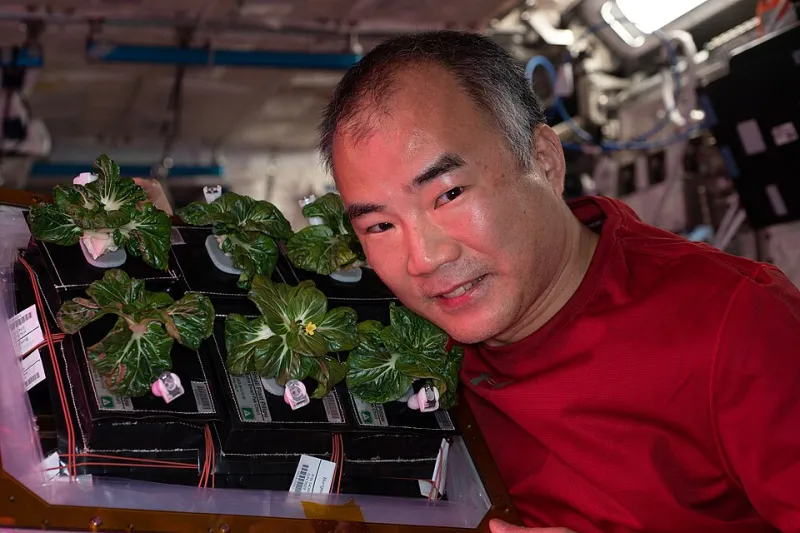
Photo: NASA, Public domain, via Wikimedia Commons
November on the allotment is mostly a story about things that have already happened. The beans are down, the courgettes have gone to marrows nobody wants, and the seed catalogues are already trying to sell you next spring. But there is usually one bed still earning its keep: the Chinese greens sown back in late summer, sitting neat and glossy under a bit of netting, waiting for a dry afternoon and a hot wok.
Pak choi, mustard greens, garlic chives. None of them are fragile imports that need a heated greenhouse and a prayer. Given cool weather, decent drainage and a little protection from the creatures that want to eat them before you do, they grow on British soil with almost suspicious ease. The trick is timing — and the willingness to treat a vegetable bed like a larder rather than a project.
Cool weather is the entire point
Most Chinese greens are brassicas that evolved for a shorter, sharper growing season than a British July. Heat makes them bolt: the stem shoots up, flowers, and the leaves turn leathery and bitter. A cool, damp autumn does the opposite. The plants sit low, the stems swell, and the flavour sweetens. A light frost improves them further.
That gives you two windows rather than one. Sow late July to mid-August for cutting from October into December. Sow again in February under fleece or a cloche for a May harvest. A polytunnel helps you stretch the shoulders of the season, but a raised bed with a decent barrow of compost and a sheet of horticultural fleece will do most of the work.
Three crops that earn their space
Pak choi. The dependable one. Look for green-stemmed types for stir-frying and red-stemmed varieties if you want the plate to look like something. Sow in modules and plant out while small — they resent root disturbance, and a check in growth is often the thing that tips them into bolting. Spacing of about 20cm gives you compact heads; tighter planting gives you smaller leaves for cut-and-come-again.
Garlic chives. A perennial, which is the closest thing to a free lunch in vegetable gardening. Flat blue-green leaves, a mild allium hit, and a clump that comes back year after year and divides easily in spring. Plant once at the edge of a bed, ignore it, and cut it to within 3cm of the ground whenever you need a handful. The white flower buds in late summer are excellent fried briefly in oil.
Mustard greens. Red mustard, mizuna, komatsuna, tatsoi — the fast, peppery, cut-and-come-again group. Sow thinly in a short row, cut the outer leaves at 10cm tall, and the plant will keep producing for weeks. Red mustard brings a wasabi-ish heat that mellows in the pan. Tatsoi is the hardiest of the lot and will shrug off a proper frost.
Slugs, pigeons and the netting question
Slugs are the main event. They will find a tray of pak choi seedlings from three gardens away. Night patrols with a torch work better than most gadgets; nematodes applied in early autumn, while the soil is still warm, do more than people give them credit for. Copper tape is worth it on containers, pointless on open ground.
Then there are pigeons, which will strip a row in an afternoon, and cabbage white butterflies, which will do it more politely over a fortnight. Fine mesh over a simple hoop frame solves both, and doubles as flea beetle protection — flea beetle being the reason your mustard seedlings look like they have been shot at with a tiny shotgun.
Keep the rotation honest. These are brassicas, so they follow the same rules as your cabbages and kale: do not put them where last year's broccoli stood, and keep the lime off unless a soil test says otherwise.
Watering, bolting and the heatwave problem
The single biggest cause of failure is a dry spell in September. Stress the plants and they panic into flower. Water deeply twice a week rather than a daily flick of the can, mulch with grass clippings, and if the forecast throws a late heatwave at you, drape shade netting over the hoops for a few days.
Harvest in the morning if you can afford the trip. Plunge the cut heads straight into a bucket of cold water — it takes the field heat out and keeps them crisp for days in the fridge drawer.
From plot to plate in nine minutes
This is the part that matters. A glut of greens should feel like a treat, not a chore.
Heat a wok until it is genuinely hot, then add a slick of groundnut oil, a thumb of ginger cut into fine matchsticks and two cloves of garlic sliced thin. Thirty seconds, no more. In go halved pak choi, cut side down, and a hard pinch of salt. Let them sit without moving for a minute so the cut faces take colour, then toss. Add a splash of water and clamp a lid on for sixty seconds — that is your steam, and it keeps the stems tender while the leaves wilt.
While that happens, stir together two tablespoons of oyster sauce, a teaspoon of light soy, a pinch of sugar and a tablespoon of Shaoxing wine. Pour it in, toss until glossy, then finish off the heat with sesame oil, a fistful of cut garlic chives and a scatter of shop-bought crisp shallots.
To plate it like a restaurant rather than a side dish: spoon the sauce into the base of a warm bowl, prop the pak choi against a mound of rice, and pile the chives on top so they are still raw and sharp where they meet the hot stem.
What to sow next
If the bed is bare by December, that is not a failure — that is a rotation. Follow the greens with broad beans or garlic, and put the next sowing of mustard in a container by the back door, where you will actually remember to cut it.