The Warm Paper Bag: Chinese Bakeries Deserve a Place in Your 2026 Routine
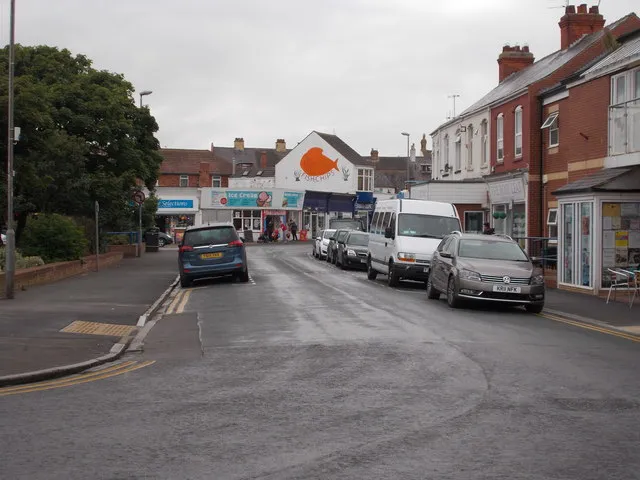
There is a particular pleasure in a warm paper bag on a wet British high street. The bag goes slightly translucent at the corners. The smell of butter and sugar escapes before you have even opened it. Inside, a custard tart or a pineapple bun is waiting, still holding the heat of the oven. This is not a restaurant meal. It is not a special occasion. It is the quiet, everyday magic of the Chinese bakery counter, and in 2026 it deserves a proper place in the UK food routine.
We tend to talk about Chinese food in Britain as though it begins and ends with the takeaway or the dim sum trolley. Both have their place. But the bakery counter is where the high street meets the steamer, and it is long overdue its moment. These shops are not novelty stops. They are bakeries first, with trays, tongs, paper bags and regulars who know exactly when the next batch comes out.
More Than a Takeaway Window
A good Chinese bakery is a daily shop, not a destination. You pop in for a loaf and leave with a custard tart. You go for a char siu puff and end up with a sesame roll for later. The rhythm is familiar to anyone who has queued in a local bakery for a sausage roll or a loaf of sourdough. The difference is the flavour vocabulary: flaky pastry, warm butter, sweet-savoury pork, toasted sesame, soft milk bread.
That makes it a natural fit for British high streets. We already understand the pleasure of a bakery stop as a small ritual. A box of cakes after a hospital appointment. A warm bun on the bus home. A Saturday morning treat eaten standing up. Chinese bakeries offer all of that, often for less than the price of a coffee, and with a set of flavours that feel both familiar and quietly exciting.
Start With the Custard Tart
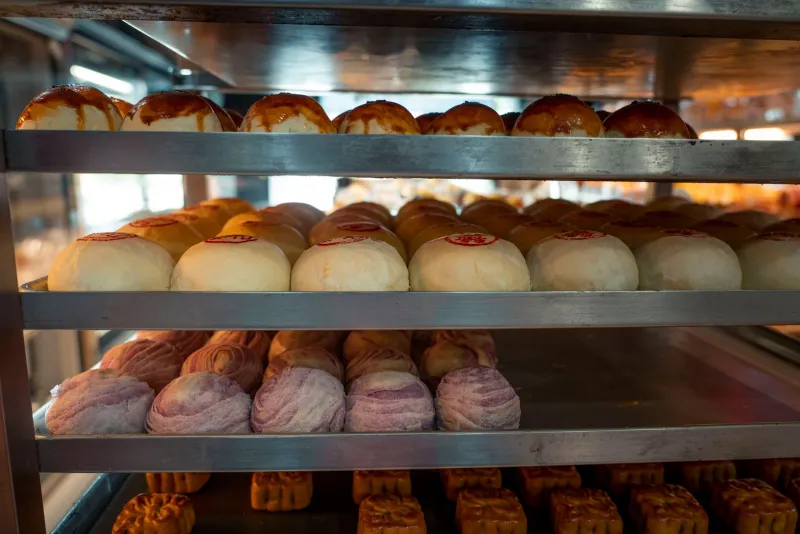
If you buy only one thing, make it the custard tart. Look for a pastry case with visible layers and a top that has blistered under the heat. The custard should be pale gold, set but still soft, with a faint wobble when you move the bag. Dark spots on top are a good sign: that is the custard catching slightly, giving you a little bitterness against the sweetness.
The British egg custard tart is a cousin, not a rival. The Chinese version tends to be smaller, richer and more flaky, with a pastry that shatters rather than crumbles. Eat it warm, but not straight from the oven. Give it two minutes. The custard needs to settle, and your mouth will thank you.
The Pineapple Bun Is a Lesson in Restraint
There is no pineapple in a pineapple bun. The name comes from the cracked, golden topping that looks a little like the fruit. What you are buying is a soft, sweet bun under a thin layer of sugary, buttery crust. Ask for it buttered and you get a thick slice of cold butter tucked inside a warm bun. That contrast is the whole point.
A good pineapple bun should be squishy but not doughy. The topping should crack when you press it, not slide off in one piece. Eat it immediately, ideally with a strong cup of tea. Do not save it for later. This is not a pastry that improves with time. It is a five-minute pleasure, and that is exactly why it works.
Char Siu Puffs and Sesame Rolls
Char siu puffs are the savoury counterpoint. Flaky pastry, a glossy filling of sweet-savoury pork, and a slightly sticky centre that catches on your fingers. Look for puffs that are deep golden rather than pale, with no sagging at the base. If the pastry has gone soft, walk away. Freshness matters more than variety here.
Sesame rolls are the quiet heroes. Soft, slightly sweet, nutty from toasted seeds, they sit somewhere between a bread roll and a snack. They are excellent with soup, useful for mopping up a bowl of noodles, and very good eaten plain on the way home. Buy two. One will not make it.
How to Eat Them Well
Do not overcomplicate things. A warm bun does not need a plate. A custard tart does not need cream. If you are taking them home, warm them briefly in a low oven rather than a microwave. The microwave will steam the pastry and turn the topping soft. A oven will bring back the crunch.
Tea is the right drink. Strong, milky, no ceremony. If you are making a small afternoon tea at home, a plate of custard tarts and pineapple buns will hold their own against scones. Add a few char siu puffs and you have something that feels generous without being fussy.
What to Look For Behind the Glass
Use the same instincts you would use in any bakery. Look for turnover. Trays that are being refilled are better than trays that have sat all afternoon. Ask what is warm. Look at the pastry: it should have layers, not a flat, uniform surface. Smell the shop. It should smell of butter, sugar and bread, not old oil.
Do not be put off by a short menu. The best bakery counters often do a handful of things very well. A shop that sells custard tarts, pineapple buns and one or two savoury puffs is likely to be fresher than one with a cabinet full of tired options.
The Ritual We Need in 2026
The British high street is changing. Rents are high, habits are shifting, and the weekly shop is more fragmented than ever. In that context, the Chinese bakery counter offers something valuable: an affordable, everyday pleasure that feels a little bit special. It is not a treat saved for a birthday. It is a Tuesday bun. A Saturday tart. A warm bag on the bus.
That is the case for 2026. Not that these bakeries should be treated as exotic, but that they should be treated as ordinary. Part of the local bakery landscape. Part of the afternoon tea rotation. Part of the reason the high street is still worth walking down. At Shangki Li, we talk about modern Chinese flavours cooked with British soul. This is that idea in its simplest form: butter, custard, sesame and pork, eaten out of a paper bag on a wet afternoon.