The Free Bag Tells You Everything: A 2026 Case for Prawn Crackers
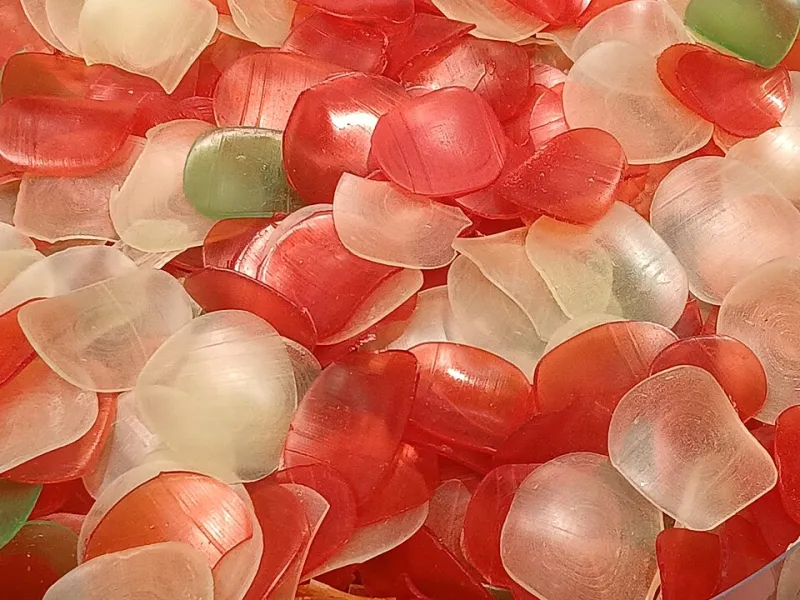
Photo: Fumikas Sagisavas, CC0, via Wikimedia Commons
There is a particular sound a takeaway bag makes when you set it down on the kitchen counter: rustle, clink, then a soft, papery crunch from somewhere near the bottom. That is the prawn cracker, the free bag nobody orders and everybody eats. At Shangki Li, we are not here to pretend it is fine dining. We are here to say it has been judged unfairly for too long.
In 2026, when a Friday night chinese is a considered purchase rather than a reflex, that little bag matters more than it used to. It is not just a freebie. It is a signal: how fresh the oil is, how busy the kitchen has been, whether anyone upstairs still cares about the small things.
From krupuk to the British counter
Prawn crackers did not begin life as a British-Chinese menu staple. Their ancestors are the krupuk of Indonesia and Malaysia: crisp, puffed snacks made from starch and dried seafood, sold in huge bags and eaten with almost everything. Chinese communities across Southeast Asia adapted the idea, and shrimp or prawn versions travelled with cooks and restaurant families. By the time Chinese restaurants and takeaways took hold in post-war Britain, the prawn cracker had found a natural home: cheap to buy in dried disc form, quick to fry, and made for the wait between ordering and the arrival of the main event.
That is the practical story. The cultural story is messier. Prawn crackers became the thing you got for free, which in Britain is another way of saying they became the thing nobody respects. They are pink and pale in the packet, oddly plastic before frying, then suddenly huge and translucent in hot oil. They are the edible equivalent of a magic trick, and yet we treat them like packing material.
Why the free bag became the default
Economics explains a lot. A dried prawn cracker costs pennies. It fries in seconds. It fills a bag, fills a gap, and gives a takeaway the appearance of generosity without touching the profit margin. There is theatre in it too: the puff, the crackle, the salt. A good batch smells faintly of prawn and hot oil, not old fryer. A bad batch tastes of nothing but salt and regret.
That is why the free bag is such a useful test. If a kitchen sends out crackers that are crisp, bubbly and properly drained, the rest of the order usually follows. If they arrive limp, pale or greasy, you can guess what is coming. The prawn cracker is the canary in the takeaway bag.
The 2026 supermarket test
This year we put a few supermarket own-brand packets up against a proper restaurant batch. The rules were simple: fry at 180–190°C in clean oil, small batches, drain on kitchen paper, taste while warm. No dipping sauce allowed until the first verdict.
The restaurant batch won, as it should. The crackers puffed dramatically, with big irregular bubbles and a clean prawn flavour underneath the salt. They were lighter than they looked and left almost no grease on the fingers. That is the benchmark: crisp, not brittle; savoury, not fishy; salty enough to make you reach for a drink, not so salty that you need one.
The supermarket own-brand packets were a mixed bag. One was surprisingly good — decent puff, mild prawn taste, a little more uniform than the restaurant version but perfectly pleasant. Another was pale and stubborn, with some discs refusing to puff properly and a few tasting faintly stale even before frying. A third was heavily salted, the kind of bag that disappears quickly because the salt drives you on rather than the flavour. None were disastrous. None were as good as the restaurant batch. The gap was mostly in texture and aroma, which is exactly where prawn crackers live or die.
Frying at home without fear
If you are frying dried crackers at home, keep it simple. Use a deep, heavy pan and no more than a third full of neutral oil. Heat to 180–190°C. Drop in one cracker as a test. It should puff within seconds, not sit there sulking. Fry in small handfuls for 10–15 seconds, turn once, lift out and drain on kitchen paper. Salt immediately if you like, though many packets are already seasoned.
The air-fryer works too, with a caveat. Brush or toss the dried crackers very lightly in oil, set the air-fryer to 200°C and give them two to three minutes, checking after one. They puff unevenly and can scorch at the edges, so do not walk away. The result is crisper and drier than deep-fried, closer to a poppadom than a proper takeaway cracker, but it scratches the itch on a wet Tuesday.
How to eat them properly
Here is the thing: prawn crackers do not need a ceremony. They need a good dip and a bit of respect. Sweet chilli is fine. Soy and vinegar with a little chilli oil is better. A bowl of curry sauce is not a crime. Crushed over leftover rice with a spoon of crisp chilli oil, they add texture to a Tuesday supper. Eaten straight from the bag while the rest of the order goes cold, they are doing exactly what they were designed to do.
So next time the bag lands on the counter, do not skip past it. Open it. Smell it. Check the puff. The prawn cracker is not the star of the British-Chinese menu, and it never will be. But it is the most honest thing in the bag — and in 2026, that is worth defending.