Small Kitchen, Big Heat: Air-Fryer Chinese for Ordinary British Weeknights
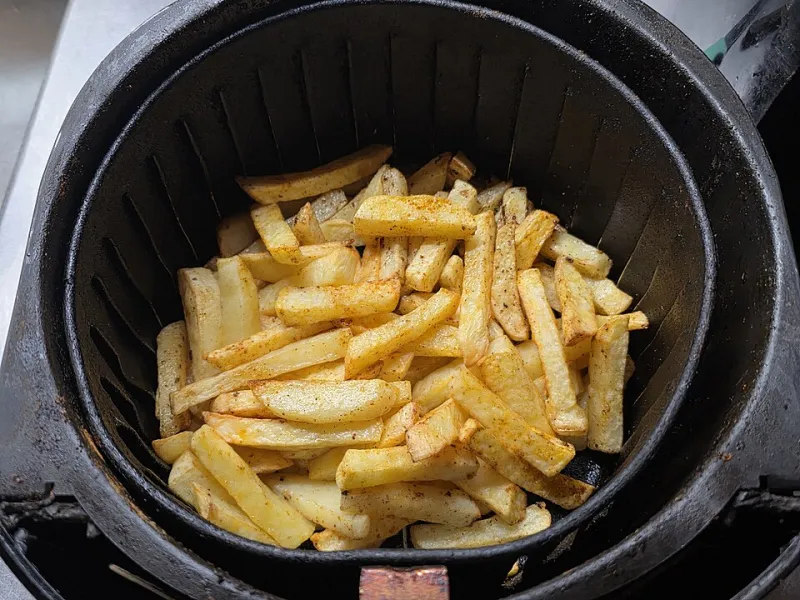
Photo: Horacio Cambeiro, CC BY-SA 3.0, via Wikimedia Commons
Small Kitchen, Big Heat
Let's start with the honest version. A wok is a commitment. It wants a hob that can push out serious heat, it wants oil, it wants a window open and an extractor fan doing its best. In a flat above a shop in Leeds, or a terraced house in Cardiff where the kitchen is really a corridor with a sink, that's not a Tuesday night plan. That's a weekend project.
So the air fryer has ended up in millions of British kitchens, usually bought for chips and then quietly ignored. Which is a shame, because it's genuinely useful for a certain kind of Chinese cooking — not the flash-fried, tossed-in-seconds kind, but the blistering, crisping, charring, reheating kind. The bits that make a weeknight bowl of rice feel like something you chose to eat rather than something you assembled.
What the machine is actually good at
Forget the marketing. An air fryer is a small, fierce, fan-driven oven. That means it's brilliant at anything that wants dry heat and contact: aubergine halves collapsing into themselves, tofu cubes going crisp at the edges, greens catching a little colour, yesterday's bao coming back to life.
It is genuinely bad at stir-frying. It can't toss. It can't toss sauce around a screaming-hot pan, so you don't get wok hei — that smoky, seared edge that makes a proper stir-fry taste like a restaurant. Anything with a wet marinade will steam instead of sear, and a cornflour slurry will just sit there looking sad.
Work with it, not against it. Use the basket to get things cooked and coloured, then finish in a bowl with a dressing. That's the whole trick.
Blistered aubergine, garlic and black vinegar
This is the one to learn first, partly because it's forgiving and partly because British cooks already know how to roast an aubergine — we've been doing it with tahini and pomegranate for years.
Halve two aubergines lengthways and score the flesh in a tight diamond. Rub with a little oil and salt, lay them cut-side up in the basket, and go at 200°C for about 15 to 18 minutes, until the flesh is properly collapsed and the edges are dark. Don't crowd them; do them in two batches if you must.
While they cook, bash together two grated garlic cloves, two tablespoons of Chinkiang black vinegar, one of light soy, a teaspoon of sugar, a drizzle of sesame oil and as much chilli oil as your household can agree on. Spoon that over the hot aubergine so it sizzles into the flesh, then scatter spring onion. Eat with rice, or with flatbreads, or standing up.
The vinegar is the point. It's malty and dark and slightly sweet, and it does the same job a good balsamic does — cuts through the oil, lifts the whole thing. Keep a bottle in the cupboard.
Salt-and-pepper tofu
Press a block of firm tofu for twenty minutes under something heavy — a tin of beans does it. Cube it, toss in a bag with two tablespoons of cornflour, a good pinch of white pepper, a smaller pinch of five-spice and half a teaspoon of salt. A little oil, then 200°C for 12 to 15 minutes, shaking halfway.
Meanwhile, gently fry a heap of sliced garlic in a few tablespoons of oil until it's pale gold, and take it off the heat before it turns. When the tofu comes out, tip it into a bowl with the garlic and its oil, more white pepper, sliced spring onion and chopped red chilli.
There's a chip-shop logic to this that British cooks will recognise immediately. Salt and pepper on something hot and crisp is not a foreign idea — it's practically a national dialect. The five-spice is just the accent.
Revived bao
Frozen bao are in most larger supermarkets now, and they are the single best argument for owning one of these machines. Sprinkle them with water, wrap them loosely in foil so they don't dry out, and give them 8 to 10 minutes at 160°C. They come out soft and steamy rather than leathery, which is more than can be said for the microwave.
Fill them with the tofu above, or leftover roast chicken with hoisin and cucumber, or slow-cooked pork shoulder from Sunday.
Charred greens with oyster sauce
Tenderstem broccoli, halved pak choi, or a bag of spring greens torn into rough pieces. Toss with a tablespoon of oil and a pinch of salt, then 200°C for 6 to 8 minutes until the tips are catching. Immediately dress with a tablespoon of oyster sauce loosened with a teaspoon of sesame oil and a pinch of sugar, and finish with crispy shallots from a tub.
This is the side dish that makes the whole plate work, and it takes less time than boiling a pan of water.
The shelf you actually need
Black vinegar, light soy, oyster sauce, sesame oil, chilli oil, cornflour, white pepper, five-spice, crispy shallots, a bag of frozen bao, and ginger in the fridge. That's maybe fifteen quid of shopping that will keep you fed for months.
Where it goes wrong
Don't put wet batter in it. Don't expect it to reduce a sauce. Don't fill the basket to the brim and wonder why everything steams. And do clean the drawer properly — burnt sugar and soy get unpleasant fast.
None of this replaces a wok. It just means you don't need one on a Wednesday.