Duck at the Centre: A British-Chinese Christmas Table for 2026
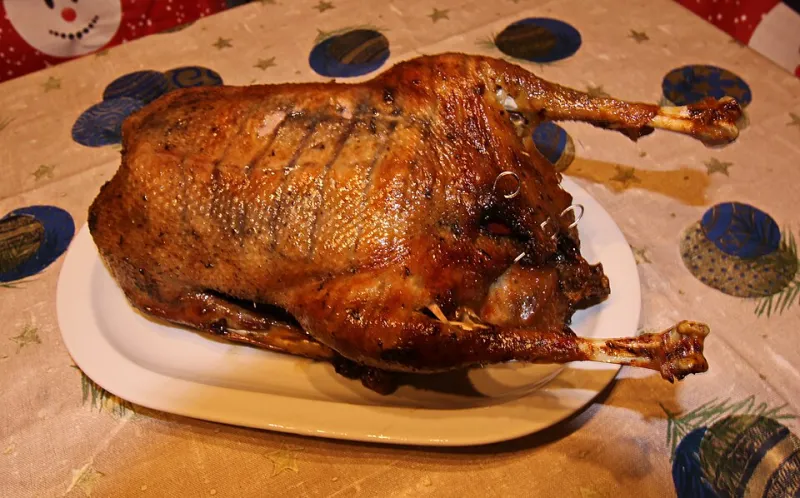
Photo: Kora27, CC BY-SA 4.0, via Wikimedia Commons
Every December, the same quiet negotiation takes place in kitchens across the country. Someone wants the traditional bird. Someone else would happily never see another dry slice of breast again. The good news, as far as we are concerned, is that this was never really a choice between two cuisines. It is a question of what goes in the middle of the table, and how everything around it is seasoned.
At Shangki Li we have always cooked with a simple idea in mind: modern Chinese flavour, British soul. Christmas is the test of that idea, because Christmas food in Britain is already a kind of preserved thing — sprouts, stuffing, bread sauce, brandy butter, a pudding that has been steaming since October. None of it needs replacing. It needs company.
Why duck makes sense of both tables
Roast duck is not an exotic guest at a British feast. Goose used to rule the Christmas table before turkey took over, and duck sits comfortably in that same rich, dark-meat territory. In a Chinese kitchen, duck is treated with real respect: dried, lacquered, roasted over high heat until the skin shatters, then carved and eaten with pancakes, spring onion and a sweet bean sauce. The crackling is the point. The fat is the point. The long, slow rendering that leaves the meat juicy but never greasy is the point.
That is precisely what a British Christmas table is missing when the centrepiece is a bird bred for leanness. Duck gives you the drama of carving, the deep gravy, and leftovers that improve overnight in the fridge.
Building the menu, course by course
The bird
We dry-brine a whole duck for twenty-four hours with fine salt, brown sugar and a generous rub of five-spice, then leave it uncovered in the fridge so the skin tightens. It roasts at 200C for the first twenty minutes, then drops to 160C until the juices run clear and the skin is a dark, glossy amber. Rest it for at least twenty minutes, breast-side down, before carving. The resting is not optional; it is where the difference between good duck and great duck lives.
The stuffing
This is where the two traditions properly shake hands. Sourdough or good white bread, torn rather than cubed, with softened onion and celery, thyme, chopped chestnuts, a little diced lap cheong or smoked bacon, a splash of Shaoxing wine and enough stock to bring it together. The five-spice goes in sparingly — a quarter teaspoon for a whole dish, no more — because star anise can overwhelm bread very quickly. Cook it in a separate tray rather than inside the bird, so it crisps at the edges and stays light in the middle.
The greens
Brussels sprouts, halved and blanched the day before, then thrown into a screaming hot wok with smoked bacon, a spoon of black vinegar and a little chilli oil. They should be blistered in places and still firm. If you have ever wondered why sprouts get a bad reputation, it is usually because they were boiled for eleven minutes too long.
The gravy
Roast the giblets with onion and ginger, deglaze with port, add star anise, a spoon of light soy and a ladle of stock, then reduce and strain. The soy does not make it taste Chinese; it makes it taste deeper, the way a good splash of Worcestershire sauce would.
The mandarin brandy butter
Soften good salted butter, beat in icing sugar, a generous glug of brandy, the zest and juice of two mandarins and a pinch of salt. Roll it in parchment and chill. It melts over the Christmas pudding, obviously — but try a slice on the duck, or on roast parsnips, and you will understand why we make double. It keeps for a week in the fridge and freezes well.
Timings and quantities for eight
One duck weighing around 2.2 to 2.5kg will feed four to six people generously once the sides are on the table. For eight, roast two ducks, or one duck alongside a glazed ham. Dry-brine on Christmas Eve, make the stuffing and the brandy butter two days ahead, blanch the sprouts the night before, and leave yourself nothing to do on the day except roast, carve and sit down.
Serve jasmine rice alongside the roast potatoes. This is not a compromise; it is one of the better decisions you will make all year, because the rice catches the duck fat and the gravy in a way potatoes simply cannot.
Boxing Day, and the day after that
Carve every last scrap off the carcass. The remaining meat becomes pancakes with cucumber and hoisin, or a duck fried rice with ginger and spring onion, or a slow congee for the morning after. The bones go into a pot with water, a thumb of ginger and a few peppercorns for a stock that will make the best noodle soup of the winter.
A table that feels like both
Nothing on this menu is a gimmick. It is a roast dinner, seasoned by people who have spent years cooking Chinese food and have a soft spot for a British Christmas. That, in the end, is the whole idea behind Shangki Li — and it is the reason our festive tables in 2026 look the way they do: loud, generous, and very hard to leave.